
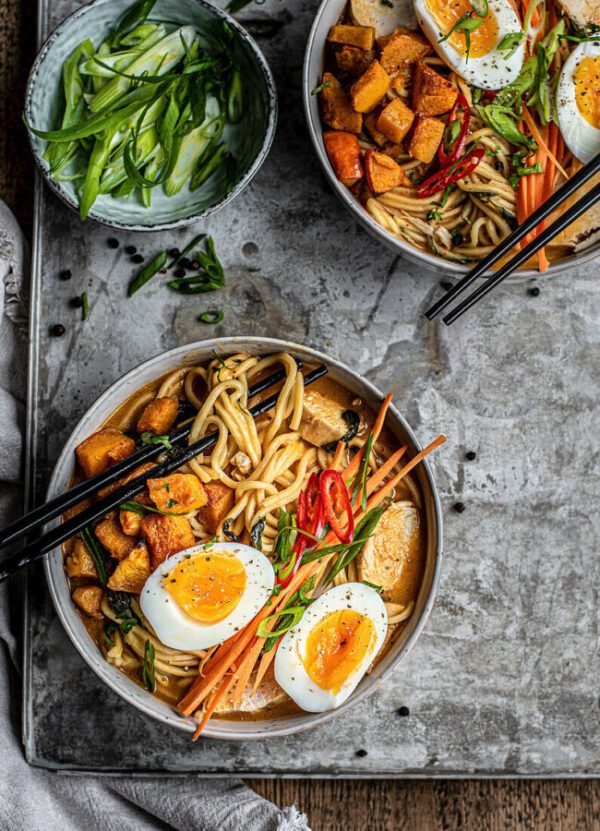
Did you know that the humble ramen egg, also known as Ajitsuke Tamago or Ajitama, is one of the most sought-after toppings for a steaming bowl of ramen? In Japan, ramen is more than just a meal; it’s a cultural icon, and the perfectly cooked, marinated egg is a cornerstone of its delicious complexity. This flavorful addition elevates a simple noodle soup into a truly satisfying culinary experience.
What Exactly is a Ramen Egg?
A ramen egg is essentially a soft-boiled egg that has been marinated in a savory, umami-rich mixture. The marinating liquid typically includes soy sauce, mirin (a sweet rice wine), sake, and sometimes sugar or dashi. This process not only infuses the egg white with a beautiful amber hue and a salty-sweet flavour but also creates a jammy, custardy yolk that is incredibly decadent. Unlike a regular hard-boiled egg, the yolk remains slightly runny, creating a delightful contrast in texture and a burst of rich flavour when you bite into it.
The Art of the Perfect Ajitsuke Tamago
Achieving the perfect ramen egg requires a bit of precision. The eggs are typically boiled for a specific amount of time to achieve that ideal soft-boiled consistency. Many home cooks and professional chefs alike find that a 6 to 7-minute boil for large eggs, followed by an ice bath, yields the best results for the yolk.
The marinating process is where the magic truly happens. The eggs are peeled and then submerged in the prepared marinade for at least a few hours, and ideally overnight. This allows the flavours to penetrate deeply into the egg. According to ramen expert and author of “Ramen Obsession,” Justin J. Guerra, “The key to a great ajitsuke tamago is patience. Letting it marinate overnight is crucial for that deep, satisfying flavor.”
Why Are Ramen Eggs So Popular?
The popularity of ramen eggs stems from several factors:
- Flavor Enhancement: They add a complex layer of savory and sweet notes that complement the rich broth and noodles.
- Textural Contrast: The soft, yielding egg white and the creamy yolk provide a wonderful textural counterpoint to the chewy noodles.
- Visual Appeal: The marbled, amber-colored whites and vibrant yolks make any bowl of ramen look more appetizing and professional.
- Nutritional Value: Eggs are a good source of protein and other essential nutrients, making them a valuable addition to any meal.
How do I peel the eggs easily?
A common trick for easy peeling is to gently crack the entire egg all over and then submerge it in an ice bath for at least 10 minutes before peeling. This helps the shell separate from the egg white.
For those looking to master this essential ramen component, exploring recipes and techniques is key. You can find a detailed guide on how to make your own delicious ramen eggs, including variations and tips, at Yokomom’s Ajitama recipe. For more insights into the world of ramen and its ingredients, resources like The Ramen Database offer a wealth of information. The journey to the perfect bowl of ramen often starts with mastering the art of the ramen egg.